Currently Empty: R0.00

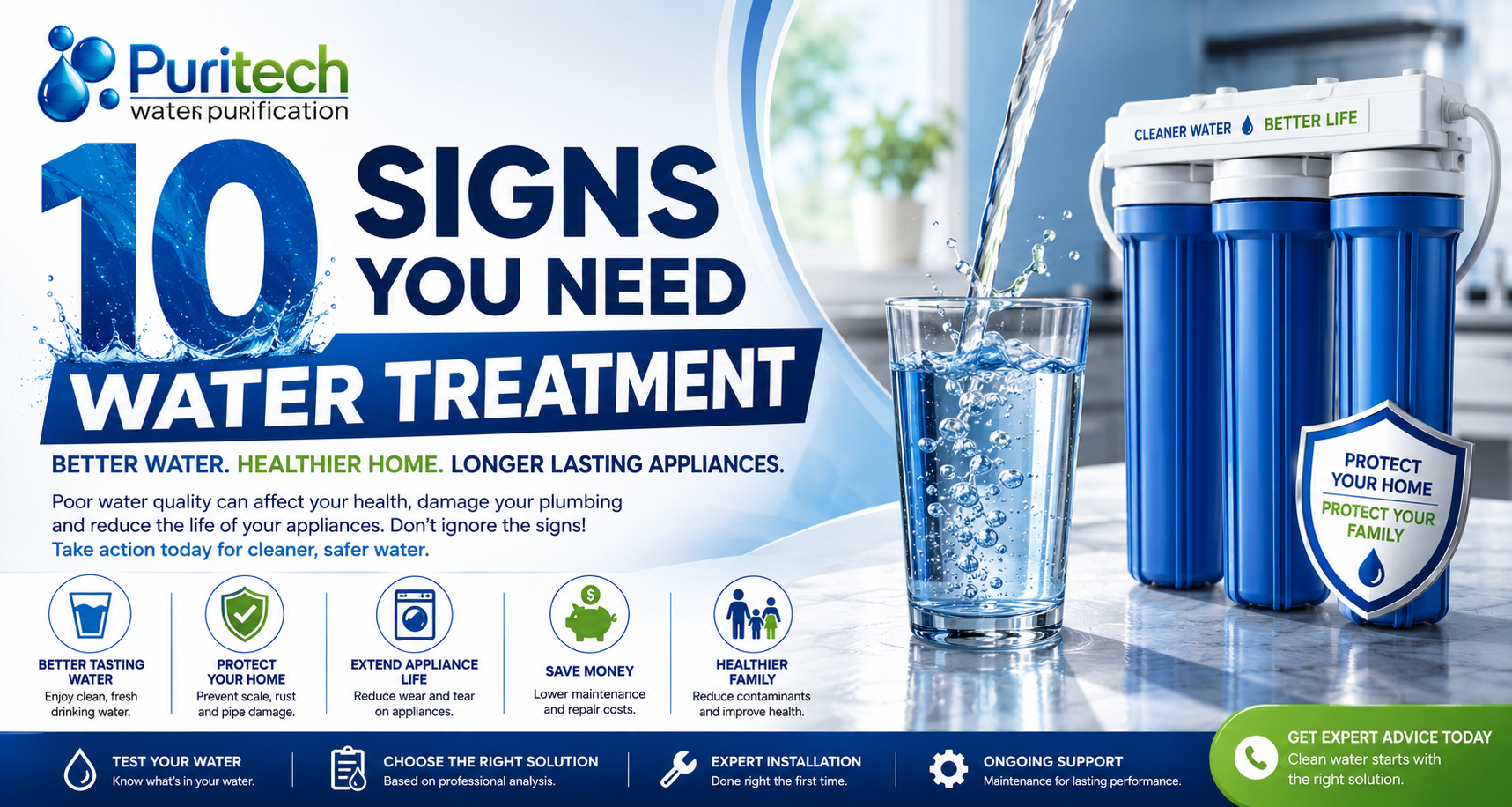
10 Signs You Need a Water Treatment System
Many homeowners only consider installing a water treatment system after experiencing a major plumbing issue or noticing obvious changes in their water. However, poor water quality often develops gradually, making it easy to overlook the warning signs.
Whether your water comes from a municipal supply, borehole or another source, recognising these early indicators can help you address problems before they become costly repairs. A properly selected water treatment system can improve water quality, protect your plumbing and extend the lifespan of your household appliances.
Here are ten signs that it may be time to invest in a water treatment system.
1. Your Water Has an Unpleasant Taste or Odour
Clean drinking water should taste fresh and have little to no noticeable odour.
If your water has a:
- Chlorine taste
- Metallic taste
- Musty smell
- Rotten egg odour
- Chemical taste
It may indicate that additional treatment is needed.
Activated carbon filtration, reverse osmosis or other treatment technologies may help depending on the cause.
2. White Scale Appears on Taps and Appliances
White deposits on taps, showerheads, kettles and coffee machines are often caused by hard water.
Over time, scale build-up can:
- Reduce appliance efficiency
- Increase electricity consumption
- Damage geysers
- Block pipework
- Shorten equipment lifespan
A water softener or other suitable treatment solution can help reduce scale formation.
3. Water Pressure Keeps Decreasing
If your water pressure gradually drops, poor water quality may be contributing to the problem.
Possible causes include:
- Sediment accumulation
- Scale build-up
- Clogged filters
- Fouled membranes
A professional inspection can determine whether water treatment or maintenance is required.
4. Your Laundry Looks Dull
Minerals and contaminants in untreated water can affect detergents and fabric care.
Signs include:
- Clothes feeling stiff
- Whites appearing grey
- Colours fading faster
- Soap not rinsing properly
Improving water quality can help protect your clothing and improve washing performance.
5. Soap Doesn’t Lather Properly
Hard water makes it difficult for soap to form a rich lather.
As a result, you may notice:
- More soap consumption
- Soap residue
- Water spots
- Increased cleaning effort
Treating hard water improves cleaning efficiency throughout the home.
6. Your Glassware Has Water Spots
If dishes and glassware come out of the dishwasher covered in white spots or streaks, dissolved minerals may be the cause.
This is another common sign of hard water.
7. Your Appliances Need Frequent Repairs
Poor water quality can affect:
- Geysers
- Washing machines
- Dishwashers
- Coffee machines
- Ice machines
Mineral deposits gradually reduce efficiency and increase wear on internal components.
A water treatment system helps protect these valuable appliances.
8. Rust-Coloured or Cloudy Water
Discoloured water may indicate:
- Rust
- Iron
- Sediment
- Pipe corrosion
Although the cause varies, a professional water analysis should always be the first step before selecting treatment equipment.
9. You Buy Bottled Water Regularly
If your family depends on bottled water for drinking, it may be worth comparing the long-term cost with a home water treatment system.
Many households find that installing a filtration system provides greater convenience while reducing ongoing expenses.
10. Your Water Has Never Been Tested
One of the biggest warning signs is simply not knowing what’s in your water.
A professional water analysis identifies important characteristics such as:
- pH
- Water hardness
- Iron
- Manganese
- TDS
- Turbidity
- Conductivity
- Other contaminants
Testing your water allows you to choose the most effective treatment solution instead of relying on guesswork.
What Should You Do If You Notice These Signs?
If you’ve recognised one or more of these warning signs, don’t ignore them. Water quality problems rarely improve on their own and often become more expensive to resolve over time.
The best approach is to investigate the cause before investing in any equipment.
Follow these simple steps:
- Arrange a professional water analysis.
- Identify the contaminants affecting your water.
- Discuss the results with a water treatment specialist.
- Select equipment designed specifically for your water conditions.
- Schedule routine maintenance to keep the system performing at its best.
Taking these steps ensures you invest in the right solution from the beginning.
Why Water Analysis Comes First
Every water source is different.
Even neighbouring properties supplied by the same municipality can experience slight variations in water quality due to pipework, storage conditions and local infrastructure.
A professional water analysis measures important parameters such as:
- pH
- Total Dissolved Solids (TDS)
- Water hardness
- Iron
- Manganese
- Turbidity
- Conductivity
- Other water quality indicators
Rather than guessing which system you need, the results allow a water treatment specialist to recommend the most effective solution.
The Benefits of Early Action
Installing the correct water treatment system before serious problems develop offers many advantages.
These include:
- Better-tasting drinking water
- Improved water clarity
- Protection for plumbing
- Longer appliance lifespan
- Reduced scale build-up
- Lower maintenance costs
- Improved energy efficiency
- Greater peace of mind
Addressing water quality issues early often prevents expensive repairs later.
When Should You Contact a Water Treatment Specialist?
You don’t need to wait until your water becomes unusable.
It’s a good idea to seek professional advice if:
- Your water has changed in taste or smell.
- Scale appears regularly on taps and appliances.
- Water pressure continues to decrease.
- Your appliances require frequent repairs.
- You rely on bottled water every day.
- You have never had your water tested.
- You’re moving into a new home.
- You’re installing new plumbing or water-using appliances.
A professional assessment can help you choose the most appropriate treatment solution.
Frequently Asked Questions
Can municipal water still require water treatment?
Yes. Municipal water is treated to meet drinking water standards, but it may still contain chlorine, hardness minerals, sediment or other characteristics that affect taste, plumbing and household appliances.
How often should my water be tested?
Municipal water should be tested whenever you notice changes in quality or before investing in a new treatment system. Borehole water should be tested regularly because its quality can change over time.
Can hard water damage household appliances?
Yes. Hard water can cause mineral scale to build up inside geysers, kettles, dishwashers, washing machines and coffee machines, reducing efficiency and shortening their lifespan.
Will a water treatment system reduce maintenance costs?
In many cases, yes. The right system helps protect plumbing, reduces scale build-up and improves appliance performance, which can lower maintenance and repair costs over time.
Conclusion
Recognising the early warning signs of poor water quality can save homeowners significant time, money and frustration. Whether you’re dealing with unpleasant tastes, hard water, reduced pressure or frequent appliance repairs, these symptoms often indicate that your home could benefit from water treatment.
The most effective solution always starts with understanding your water. A professional water analysis removes the guesswork and helps identify the right treatment technology for your specific needs.
At Puritech, we don’t believe in one-size-fits-all solutions. We assess your water quality, explain your options, and recommend a system designed to provide reliable performance, protect your home and deliver clean, high-quality water for years to come.